
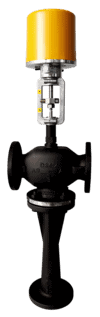
Vacuum steam
Ejectors differ from conventional compressors in that they have no moving parts. Instead, the vacuum ejector working principle is based on the Ejector-Venturi principle, in which the pressure of a driving fluid like gas, steam, or water transforms into velocity that entrains a secondary fluid. As the mixture enters the Venturi diffuser, its velocity is transformed into pressure that's strong enough to discharge against an established back pressure.
Recover Energy and Boost Efficiency

One of the biggest ejector benefits is the ability to recover energy that would otherwise be lost in the process. For industries seeking sustainable, cost-efficient operations like those in the U.S., Industrial ejector systems are particularly important. Examples include:
- Refrigeration and HVAC. In vapor compression systems, ejectors recover the expansion work, thereby reducing energy consumption. When used with water ejector control circuits, these ejectors offer a smart way to manage modern heating and cooling demands. This makes them valuable as the industry shifts towards greener refrigerants and eco-friendly HVAC designs.
- Heat Pumps. With the ability to recover expansion work, ejectors boost the efficiency of vapor compression heat pumps. This makes them a highly sustainable option for environmentally conscious companies.
- Drying Processes. Used in paper manufacturing and textile industries to increase drying capacity by boosting steam pressure
- Evaporation and Distillation. Support consistent temperature control in chemical, food, and beverage processing.
- Blow-Through Steam Recirculation. Capture and reuse steam from syphon systems in rotating equipment like dryers
A Tool to Intensify and Optimize Processes
Ejectors do more than recover energy. They also drive process intensification, simplifying operations while boosting efficiency. For example:
- Vacuum Creation and Distillation. Ejectors are a top solution for creating vacuum conditions in industrial settings, such as crude oil distillation. When considering an ejector vs vacuum pump systems, note that steam ejector uses the ability to lower vaporization temperatures, help prevent molecular cracking, and keep processes running smoothly.
- Gas Compression and Recovery. In many facilities, ejectors compress or boost fluids at a fraction of the cost of mechanical compressors. For example, they can recover gases from storage tanks, which cuts costs and reduces emissions without a lot of maintenance demands.
- Mixing and Aeration. Ejectors are highly effective in wastewater treatment because they support mixing and jet aeration. They are also widely used in nitrification and other processes that require dependable oxygen transfer without introducing complex equipment.
Specialized Applications
Ejectors also stand out in advanced and specialized industries, such as:
- Pulp and Paper - Ejectors are critical for "dryer drainage," where they capture low-pressure "blow-through" steam from paper machine cylinders and boost it back into the steam supply, ensuring uniform drying temperatures across the web while reducing total steam demand by up to 20%.
- Petro/ Chemical Plants - Thermocompressors create the deep vacuum necessary for crude oil distillation and vapor recovery, allowing for lower boiling points that prevent "molecular cracking" and ensure the safe handling of volatile gases without the risk of mechanical sparks.
- Food & Beverage - These systems enable rapid "flash cooling" and low-temperature evaporation for products like juices and sauces, preserving flavor and nutritional integrity while supporting the high-vacuum deodorization process essential for refining edible oils.
- Textile - By capturing and recycling "blow-through" steam from drying cylinders, thermocompressors optimize the thermal balance of the plant, significantly increasing drying capacity while reducing the overall carbon footprint of the finishing process.
- Distilleries - Utilizing Thermal Vapor Recompression (TVR), thermocompressors recycle the latent heat from spent wash evaporators back into the distillation process, drastically cutting boiler fuel consumption and ensuring the precise pressure control needed for consistent spirit quality.
- Desalination - Ejectors support water desalination and similar processes, including multi-stage setups that run at low pressures for tasks like edible oil deodorization.
- Hybrid Systems - In some cases, ejectors can be paired with liquid ring vacuum pumps, to form hybrid systems that save steam and boost efficiency. The result is less steam consumption and smoother, more reliable operation. Hybrid systems sometimes also integrate thermocompressors using the same principle as ejectors to recycle and compress steam.
Learn More About Putting Ejector Technology to Work with Baelz North America
Ejector technology continues to move beyond its traditional roles to take on exciting and useful applications that are eco-friendly, optimize operations, and meet the unique needs of U.S. industries.
At Baelz North America, we're proud to supply a wide range of energy-saving products and engineered systems for industrial heating and cooling. As the official North American supplier of Baelz Automatic components, we provide high-quality ejectors, steam systems, and related technologies, all backed by shorter lead times and experienced local support.
Our technical sales experts are here to guide you through pricing, application support, and selecting the best components for your needs.
Contact us today with any questions about how ejectors work and their uses, or request a quote to start an order.